
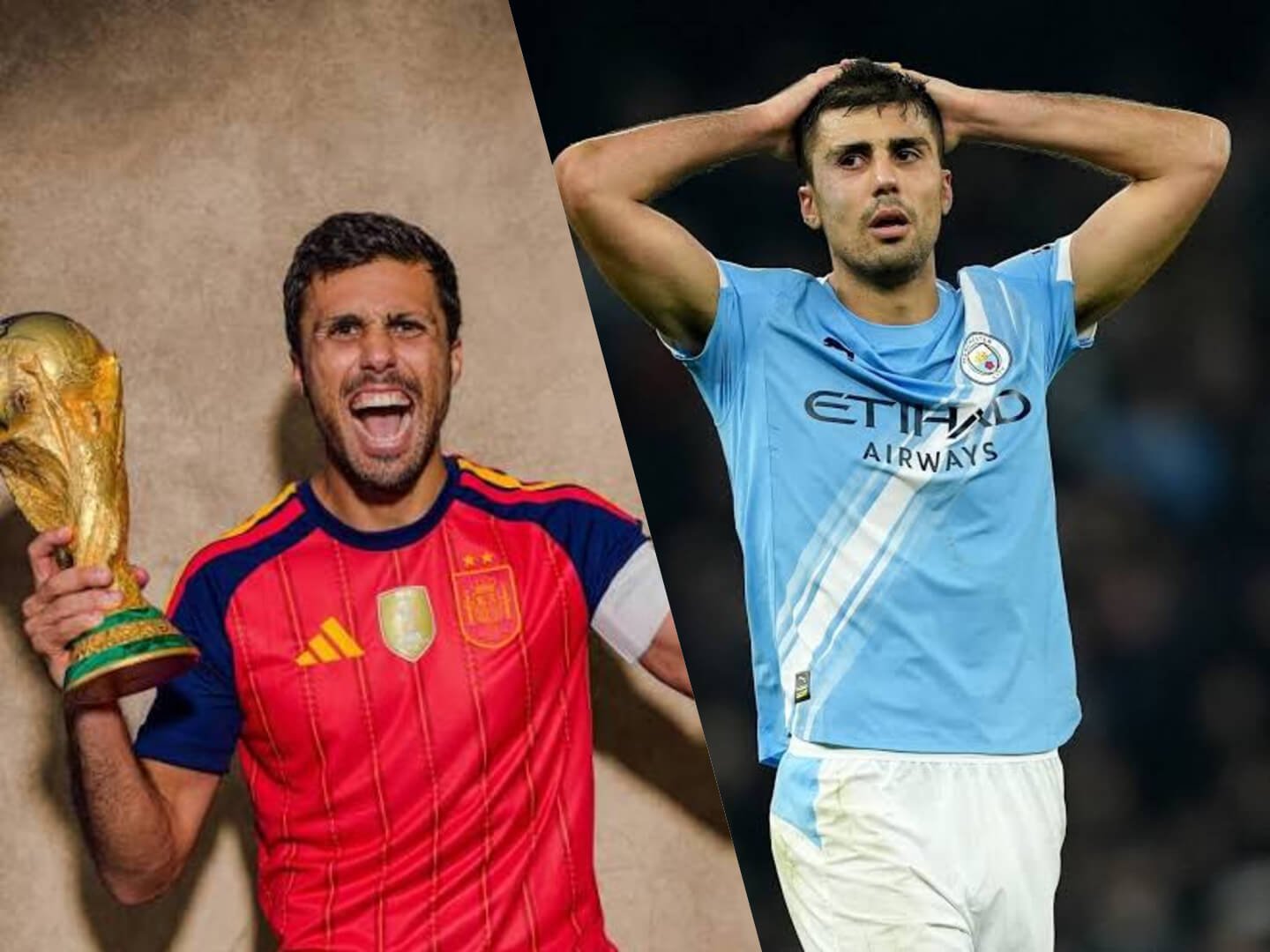
Rodri injury concerns have centered on two major setbacks: a serious knee problem in 2024 involving the ACL and meniscus, followed by a later back issue requiring minor surgery. Manchester City has confirmed both situations, but the club has not provided an exact return date for his latest recovery.
Rodrigo Hernández Cascante, widely known as Rodri, has become one of the most influential midfielders in modern football. His ability to control possession, protect the defense, and dictate tempo has made him a crucial figure for Manchester City and the Spain national team.
The midfielder’s injury problems have attracted global attention because of his importance to City’s system. Under manager Pep Guardiola, Rodri has often operated as the central player connecting defensive structure with attacking movement, making his availability a major factor in the club’s performances.
Who is Rodri?
Rodri joined Manchester City from Atlético Madrid in 2019 and quickly developed into one of Europe’s leading defensive midfielders. His technical quality, positional awareness, and physical presence allowed him to become a consistent starter at club and international level.
During his City career, Rodri has helped the club win major trophies, including the UEFA Champions League in 2023, when he scored the winning goal against Inter Milan in the final. His performances also earned him the Ballon d’Or in 2024, recognizing his exceptional season.
For Spain, Rodri has been equally important. He played a key role in Spain’s success at UEFA Euro 2024, where he was named the tournament’s Player of the Tournament after helping his country win the competition.
His role requires constant defensive awareness and repeated physical effort. Unlike attacking players who may avoid frequent challenges, defensive midfielders often cover large areas, compete for possession, and absorb pressure from opposing teams throughout matches.
| Field | Details |
|---|---|
| Full Name | Rodrigo Hernández Cascante |
| Known As | Rodri |
| Age | 30 years old (born June 22, 1996) |
| Birthplace | Madrid, Spain |
| Nationality | Spanish |
| Profession | Professional footballer (midfielder) |
| Height | Approximately 1.90 m (6 ft 3 in) |
| Education | Attended the Universidad Carlos III de Madrid while developing his football career |
| Years Active | 2015–present |
| Current Club | Manchester City FC |
| Notable Works | Premier League titles, UEFA Champions League 2023, UEFA Euro 2024 with Spain |
| Awards | Ballon d’Or 2024, UEFA Euro 2024 Player of the Tournament, UEFA Champions League Final Player of the Match (2023) |
| Net Worth | Not officially confirmed; estimates vary by source and should be treated as unofficial |
| Spouse/Partner | Not publicly confirmed |
| Social Media | Instagram: @rodrihernandezrm |
Rodri’s ACL and meniscus injury in 2024
The first major Rodri injury occurred during Manchester City’s Premier League match against Arsenal on September 22, 2024. Rodri suffered a knee injury during the 2-2 draw at the Etihad Stadium, leading to concerns about the severity of the problem.
Manchester City later confirmed that Rodri had undergone surgery after suffering damage involving the ACL and meniscus in his right knee. The club did not provide a guaranteed return date, but Guardiola indicated that the injury would keep him out for a significant period.
ACL injuries are among the most serious setbacks in football because the ligament plays a vital role in knee stability. Recovery usually involves surgery, rehabilitation, strength training, and a carefully managed return to competitive action.
The meniscus involvement added another complication because it affected additional structures within the knee. Medical teams typically approach combined injuries cautiously because returning too quickly can increase the risk of further problems.
Following the operation, Rodri began a long rehabilitation program designed to restore movement, strength, and match fitness. Manchester City regularly monitored his progress while avoiding pressure to accelerate his comeback before he was medically ready.
Guardiola repeatedly emphasized patience during Rodri’s recovery. The manager explained that long-term injuries require careful management because physical readiness in training does not always mean a player is prepared for the demands of competitive matches.
The impact of Rodri’s absence
Rodri’s absence created a significant tactical challenge for Manchester City. The team had to adjust its midfield structure because few players offer the same combination of defensive protection, passing range, and control that the Spanish midfielder provides.
Manchester City has had several talented midfield options, including Mateo Kovacic and other squad members capable of covering different roles. However, replacing Rodri’s specific influence is difficult because his responsibilities extend beyond simple ball recovery.
His injury also highlighted how important specialized midfield roles have become in elite football. Similar to players such as Sergio Busquets during his peak years at FC Barcelona, Rodri provides balance that often becomes most noticeable when he is unavailable.
The team’s tactical adjustments demonstrated how dependent Guardiola’s style can be on intelligent positioning. A midfielder in Rodri’s role must understand when to slow the game, when to accelerate attacks, and when to protect defenders.
Rodri’s return from his knee injury
After months of rehabilitation, Rodri gradually returned to football activities under Manchester City’s medical supervision. The club focused on controlled progression rather than setting unrealistic deadlines for his comeback.
The midfielder’s return involved rebuilding confidence as well as physical ability. Players recovering from major knee injuries often need time to regain trust in their movements, especially when returning to high-intensity situations involving sudden changes of direction.
Manchester City continued to manage Rodri’s workload carefully after his return. The club understood that a player recovering from an ACL injury requires ongoing monitoring even after completing initial rehabilitation.
His comeback represented an important moment for both Rodri and the team. Returning from such an injury requires commitment from the player, medical staff, coaching team, and everyone involved in the recovery process.
Latest Rodri injury update
After his knee recovery period, Rodri later faced another fitness issue involving his back. Manchester City confirmed that he underwent minor back surgery in July 2026 after experiencing ongoing discomfort.
The club announced that Rodri would begin rehabilitation following the procedure but did not provide a specific timetable for his return. Because no official recovery schedule was released, predictions about his availability remain uncertain.
Reports suggested that the back problem could affect his participation at the beginning of the season, but Manchester City has not confirmed an exact comeback date. The most reliable information remains the club’s official medical updates.
The nature of Rodri’s back surgery has not been publicly detailed by Manchester City. Claims about specific spinal conditions or exact recovery periods should therefore be treated carefully unless confirmed by the player, club, or medical representatives.
How Rodri’s injuries affect his career
Rodri’s recent injuries raise questions about managing the workload of elite midfielders. Players in physically demanding positions often experience challenges because they combine defensive actions, running distance, and technical responsibility.
However, injury history alone does not determine a player’s future performance. Many footballers have returned successfully after major injuries by following structured rehabilitation programs and adjusting their training methods.
Rodri’s quality has been built on more than physical ability. His intelligence, passing accuracy, and understanding of space are qualities that can continue to influence matches even as he adapts his playing style over time.
His recovery will likely remain a major topic for Manchester City supporters because the midfielder represents a unique tactical asset. The club’s approach will depend on medical assessments rather than external expectations or speculation.
Manchester City’s options without Rodri
When Rodri is unavailable, Manchester City must find alternative ways to maintain midfield control. The club can use different combinations of players depending on the opponent, competition, and tactical requirements.
Players such as Mateo Kovacic provide experience and technical ability, while other midfielders can offer different qualities including energy, creativity, or defensive coverage. However, no replacement can perfectly replicate Rodri’s complete skill set.
Guardiola has often adapted his formations throughout his managerial career. His teams have used flexible midfield structures at Manchester City, Bayern Munich, and Barcelona, showing his willingness to change tactics when important players are unavailable.
The challenge for City is not only replacing a player but replacing a system function. Rodri influences how the team builds attacks, defends transitions, and controls the rhythm of matches.
Frequently asked questions about Rodri injury
Rodri’s confirmed injuries include a serious knee injury in 2024 involving the ACL and meniscus, as well as a later back issue that required minor surgery. Manchester City has confirmed both situations through official announcements.
Rodri suffered his major knee injury during Manchester City’s Premier League match against Arsenal on September 22, 2024. The club confirmed the diagnosis and surgery afterward, beginning a lengthy rehabilitation process.
Rodri has undergone surgery more than once during these injury periods. The first procedure addressed his knee injury, while the later operation involved his back problem, according to Manchester City’s announcement.
The exact return date following his back surgery has not been confirmed publicly. Any specific timeline beyond official statements remains uncertain because recovery depends on medical progress and rehabilitation results.
Rodri is considered important to Manchester City because he provides defensive security, passing quality, and tactical control. His role allows Guardiola’s team to maintain possession while protecting against counterattacks.
Conclusion
Rodri’s injury journey has involved significant challenges, beginning with his ACL and meniscus problem in 2024 and continuing with a later back issue requiring surgery. Both situations have been confirmed by Manchester City, while some recovery details remain private.
The midfielder’s importance to Manchester City and Spain explains why every update receives worldwide attention. His influence comes from a combination of technical ability, tactical intelligence, and leadership developed through years at the highest level.
The next stage of Rodri’s career will depend on rehabilitation, medical guidance, and his ability to return safely. Manchester City’s priority will remain ensuring that one of football’s most influential midfielders is fully prepared before competing regularly again.Frequently Asked Questions About Rodri Injury
What injury did Rodri suffer?
Rodri suffered a serious right knee injury in 2024 involving the ACL and meniscus. Manchester City confirmed that he underwent surgery before beginning a long rehabilitation process.
When did Rodri suffer his ACL injury?
Rodri suffered his knee injury during Manchester City’s Premier League match against Arsenal on September 22, 2024. The match ended in a 2-2 draw at the Etihad Stadium.
Has Rodri had surgery for his injuries?
Yes. Manchester City confirmed that Rodri underwent surgery for his knee injury in 2024. The club later announced that he also underwent minor back surgery in 2026.
When will Rodri return from his latest injury?
Manchester City has not announced an exact return date after Rodri’s back surgery. His availability will depend on his rehabilitation progress and medical assessments.
Why is Rodri important for Manchester City?
Rodri is important because he provides defensive stability, passing quality, and control in midfield. His ability to manage the tempo of matches has made him a key part of Manchester City’s tactical approach.
