
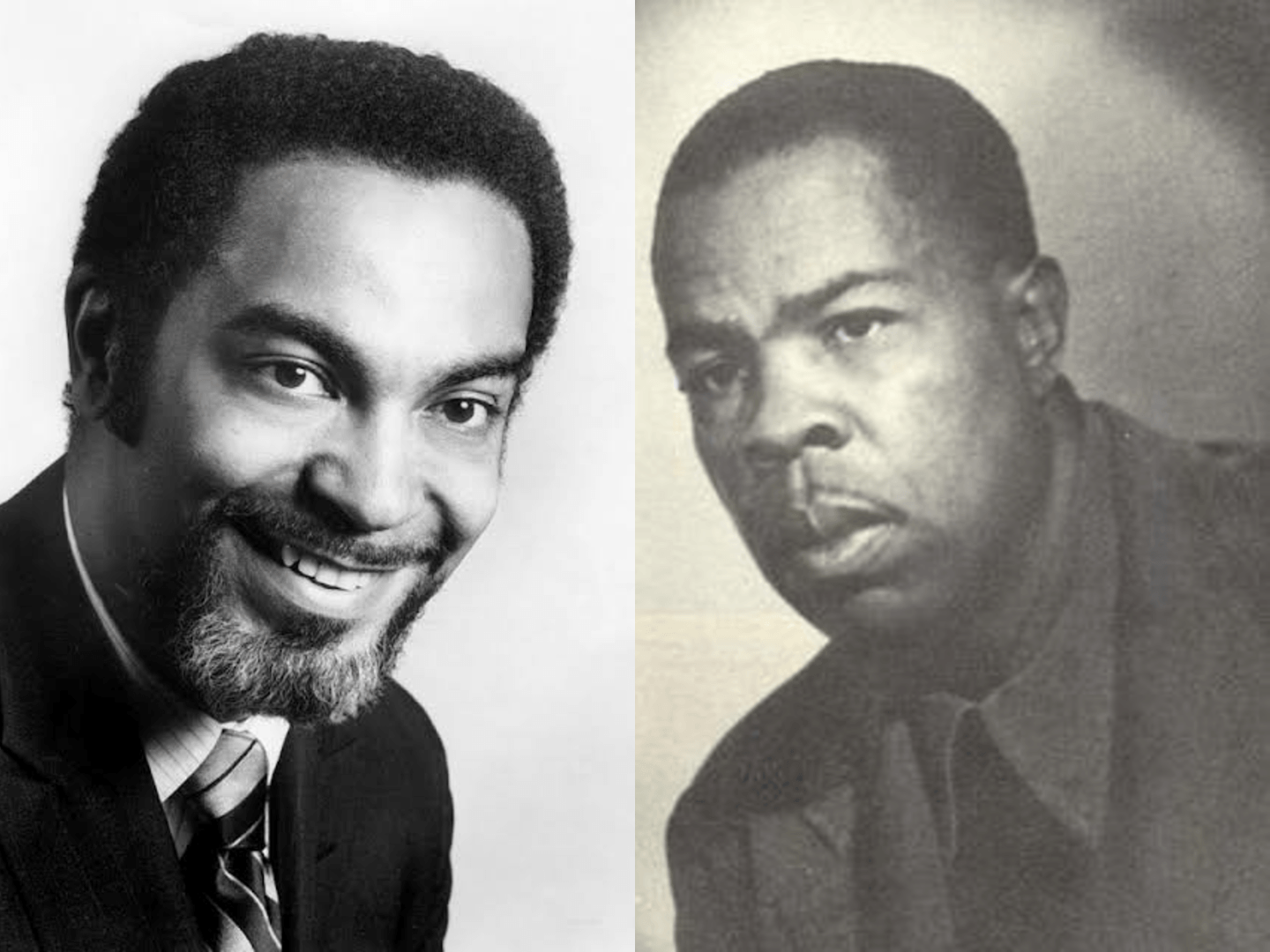
Frank Marshall Davis was a prominent African American poet, journalist, and civil rights activist whose career flourished in Chicago and Atlanta from the 1920s through the 1940s. He published four poetry collections and edited several Black newspapers before leaving the mainland for Hawaii in 1948, where he faded from national view until the Black Arts Movement rediscovered him in the 1960s .
Born on December 31, 1905, in Arkansas City, Kansas, Davis pursued journalism at Kansas State Agricultural College, now Kansas State University . After graduating in 1930, he moved to Atlanta and took an editorial role at the Atlanta Daily World . That position placed him at the helm of a paper that became a significant voice for Black readers in the South.
Davis soon relocated to Chicago, where his literary and journalistic output accelerated. He published Black Man’s Verse in 1935, followed by I Am the American Negro in 1937 and Through Sepia Eyes in 1938 . These collections established him as a poet who fused social critique with the rhythms of blues and jazz, earning him visibility alongside contemporaries like Langston Hughes and Richard Wright .
His journalism career expanded across several influential Black publications. Davis served as an editor at the Chicago Evening Bulletin, the Chicago Whip, the Chicago Star, and the Atlanta World . From 1935 to 1947, he also worked as executive editor of the Associated Negro Press, a wire service that supplied content to Black newspapers nationwide . That role gave him broad reach within the Black press at a pivotal moment in American history.
Beyond print, Davis became a cultural educator and broadcaster. In the early 1940s, he began teaching what he believed to be the first history of jazz course, at the Abraham Lincoln School in Chicago . In 1945, he launched his own radio jazz program, Bronzeville Brevities, on WJJD in Chicago . These efforts reflected his conviction that Black artistic expression deserved serious study and public celebration.Quick Bio: Frank Marshall Davis
Notes on the table: Height comes from FBI files and is not an official public record. Net worth was never publicly disclosed. Davis had no social media presence, as he died in 1987.
Davis was equally committed to civil rights organizing. He served as vice chairman of the Chicago Civil Liberties Committee from 1944 to 1947 and was a member of the national board of the Civil Rights Congress from 1947 to 1948 . His activism placed him within the era’s overlapping circles of labor advocacy, civil liberties defense, and racial justice work, causes he pursued with the same energy he brought to his writing.
In 1948, Davis made a decision that reshaped his legacy. He moved to Honolulu, Hawaii, with his second wife, Helen Canfield Davis, and deliberately stepped away from his mainland literary career . He ran a wholesale paper supply business and wrote a column called Frank-ly Speaking for the Honolulu Record, a labor newspaper published by the International Longshore and Warehouse Union . The column addressed social injustices, including the abuses of big business and government .
His departure from the mainland effectively erased him from the national literary conversation for years. Davis published one final poetry collection, Awakening, and Other Poems, in 1978, but he remained largely outside the spotlight . He died on July 26, 1987, in Hawaii . Only after his death did a fuller reckoning with his contributions begin.
The 1960s Black Arts Movement had already started that process by hailing Davis as a pioneer of Black poetry and placing him within its canon . Interest in his work was revived during that period, though his physical distance from literary centers kept his story incomplete. The posthumous publication of his autobiography, Livin’ the Blues: Memoirs of a Black Journalist and Poet, edited by John Edgar Tidwell, arrived in 1992 from the University of Wisconsin Press and offered the first sustained look at his life .
Comparing Davis to his better-known peers clarifies both his significance and his erasure. He was an intimate of Hughes and Wright, and critics have noted that Livin’ the Blues resembles their autobiographies in form, style, and message . Yet unlike Hughes and Wright, Davis chose a self-imposed exile that severed him from the networks that sustain literary reputations. His story illustrates how geography and political pressure can shape who gets remembered.
Davis’s FBI file adds another dimension to his later years. The bureau compiled nearly 700 pages on him between 1944 and 1963, with agents closely reading his Honolulu Record column and comparing its contents to the Communist Party line . That surveillance context helps explain why a writer of his productivity and connections could remain so far outside standard literary histories for so long.
Today, Davis’s legacy rests on two pillars. As a poet, he produced four collections that brought Black experience and musical cadence into American verse. As a journalist and activist, he edited papers that served Black communities and organized for civil liberties when such work carried real risk. His rediscovery is less a correction than a reminder that many mid-century Black voices operated outside the institutions that grant lasting fame, and their absence from the record is often a matter of circumstance rather than merit.
What was Frank Marshall Davis best known for?
Davis was a prominent African American poet and journalist in the 1930s and 1940s. He published four poetry collections, including Black Man’s Verse (1935) and I Am the American Negro (1937), and edited several Black newspapers such as the Chicago Evening Bulletin and the Atlanta Daily World .
Why did Frank Marshall Davis move to Hawaii?
Davis moved to Honolulu in 1948, effectively ending his mainland literary career. He later stated he decided within a week to settle there permanently, aware it meant giving up the prestige he had built in Chicago, including an upcoming Who’s Who in America listing . He ran a paper supply business and wrote a column called “Frank-ly Speaking” for the Honolulu Record .
Who rediscovered Frank Marshall Davis’s work?
The Black Arts Movement of the 1960s revived interest in Davis, hailing him as a pioneer of Black poetry and establishing him in its canon . His autobiography, Livin’ the Blues: Memoirs of a Black Journalist and Poet, edited by John Edgar Tidwell, was published posthumously in 1992 by the University of Wisconsin Press .
Did Frank Marshall Davis know Barack Obama?
Yes. Davis met a young Barack Obama in Hawaii around 1971, and Obama later mentioned Davis as a mentor in his memoir Dreams from My Father . This connection has drawn additional attention to Davis’s life and political associations in later years.
