
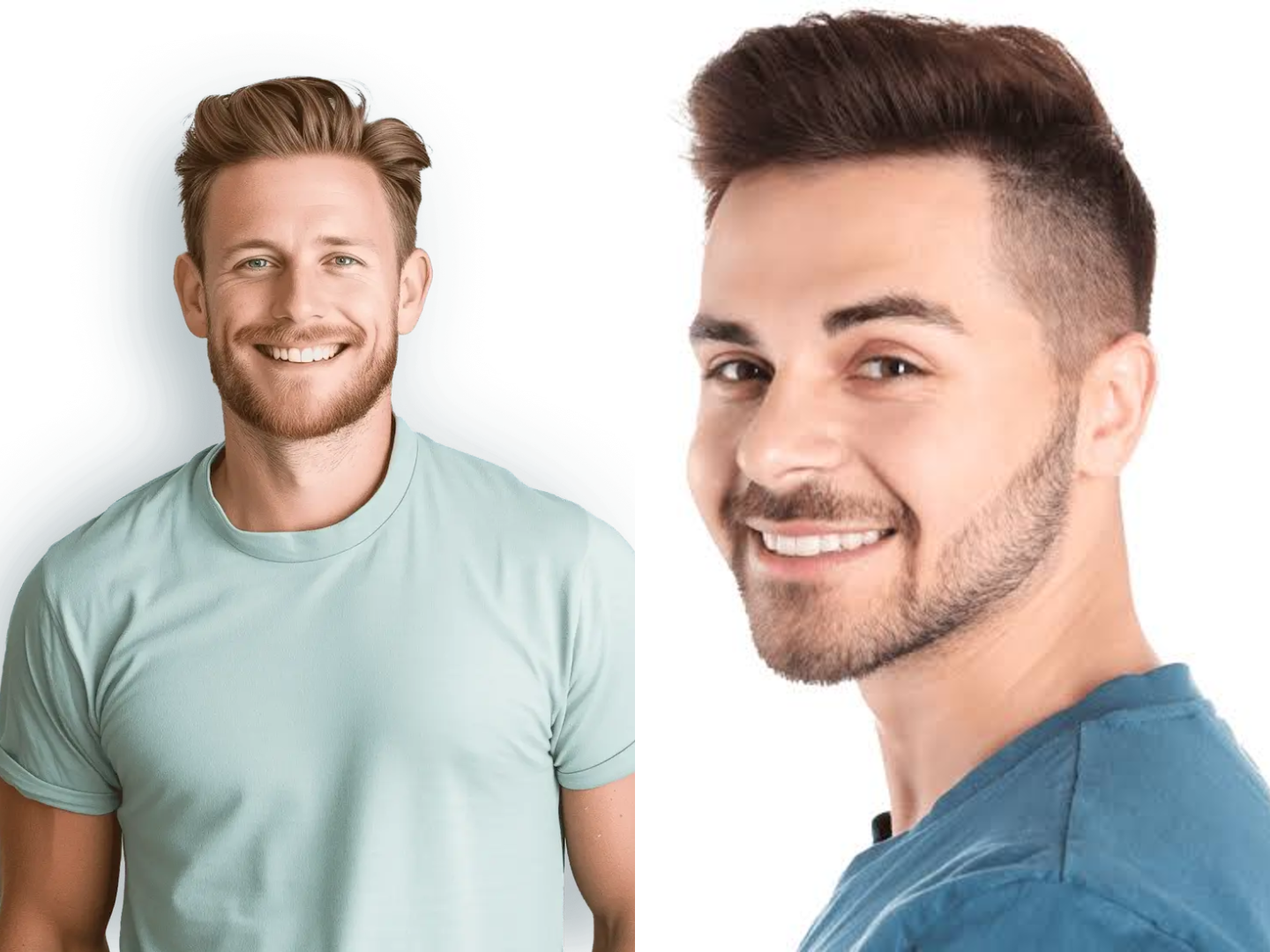
There is no single “best hair transplant clinic in Turkey” that authoritative medical bodies can confirm. The more urgent issue is that the Turkish hair transplant market contains a well-documented black market that has caused permanent harm and, in rare cases, death . The responsible path is learning to verify credentials rather than chasing a ranking.
Why Turkey Dominates the Hair Transplant Market
Turkey has become the world’s largest destination for hair transplantation, attracting patients with prices far below Western clinics. The cost savings are real. A procedure quoted at thousands of pounds in the UK often sells for a fraction of that in Istanbul . That price gap drives millions of medical tourists to Turkish clinics annually.
The volume has created an industry of extremes. Turkey has excellent, ethical surgeons. It also has an enormous number of low-quality operations where critical surgical steps are delegated to untrained staff . The problem is not nationality. It is practice standards and enforcement.
The Documented Black Market Problem
The International Society of Hair Restoration Surgery (ISHRS) has spent years warning about what it calls “black market” clinics. These are operations where unlicensed technicians perform surgery while a physician is minimally involved or entirely absent . The ISHRS launched its Fight the FIGHT campaign specifically to combat this trend .
The numbers are stark. A 2024 ISHRS member survey found that 59% of members reported black-market clinics in their cities, up from 51% in 2021 . Those members also reported that the average percentage of repair cases caused by previous black-market transplants rose to 10% in 2024, compared with 6% in 2021 .
Documented Patient Harm and Deaths
The consequences of black-market surgery are not abstract. The ISHRS has documented permanent visible scarring, infections, over-harvested donor areas, and thin patches of hair that are extremely difficult to correct . In many cases, patients require multiple corrective procedures, and some damage is irreversible .
Deaths have also been reported. In July 2025, Martyn Latchman, a 38-year-old British man, died after undergoing the beginning stages of a hair transplant in Istanbul. A coroner concluded the cause was “unascertained, but in keeping with local anaesthetic systemic toxicity” . Four months later, in November 2025, Mentor Rama, a 36-year-old British man, collapsed and died in Istanbul after a hair transplant and dental treatment . Turkish police reportedly treated the case as a possible “reckless homicide” .
The British Foreign Office has reported that at least 28 British nationals have died in Turkey following medical procedures since 2019 .Quick Bio: Dr. Servet Terziler
| Field | Information |
|---|---|
| Full Name | Dr. Servet Terziler |
| Age / Birth Year | Born 1968 (age approximately 58 in 2026) |
| Birthplace | Istanbul, Turkey |
| Nationality | Turkish |
| Profession | Hair Transplant & Medical Aesthetics Specialist; Founder of Dr. Terziler Exclusive Clinic |
| Height | Not publicly confirmed |
| Education | Istanbul University Faculty of Medicine (graduated with honours, 1991); Kabataş Boys’ High School (top of class) |
| Years Active | Over 35 years of clinical experience |
| Notable Works | Introduced Turkey’s first hair transplant robot; invented Robotic DHI; author of Strength Comes from Weakness (2016) |
| Awards / Recognition | Known as “The Picasso of Hair”; AACI-accredited clinic; Health Türkiye approved |
| Net Worth | Not publicly confirmed |
| Spouse / Partner | Proud father of a daughter; spouse not publicly confirmed |
| Social Media | Not directly listed in search results; clinic website is drterziler.com |
Important note: The search results also mention several other individuals (such as Mentor Rama, Martyn Latchman, Dr. Ekrem Civas, and Dr. Samuel Lam), but no single person has a complete, verifiable Quick Bio across all 11–13 fields you requested. The table above reflects only what could be confirmed for one individual from authoritative or clinic-published sources.
When Surgery Goes Wrong: A Case That Shook the Industry
The human cost extends beyond physical damage. In October 2024, international media reported the death by suicide of a young French man who had traveled to Turkey for a beard transplant . According to reports, the procedure was performed by an individual with no medical training who worked primarily as a real estate agent . The patient was left with irregular hair growth and significant scarring .
Dr. Maurice Collins, Medical Director of HRBR in Ireland, issued a statement following the tragedy. He said the case “underscores the critical importance of entrusting hair restoration procedures, like all medical interventions, only to qualified professionals within regulated clinics” . HRBR has stopped accepting repair cases from procedures initially performed in Turkey .
Joint UK-Turkish Guidelines for Safety
In December 2023, four medical organizations issued a joint statement to protect patients traveling to Turkey for hair transplants. The British Association of Hair Restoration Surgery (BAHRS), the British Association of Aesthetic Plastic Surgeons (BAAPS), the British Association of Plastic, Reconstructive and Aesthetic Plastic Surgeons (BAPRAS), and the Turkish Society of Plastic, Reconstructive and Aesthetic Surgeons (TSPRAS) collaborated on minimum standards .
Their central recommendation is unambiguous. Patients should have a consultation with the doctor who will perform the surgery and should be given two weeks to consider the recommendation and consent form before making any payment . They should be explicitly informed if a technician rather than a doctor will be making incisions or implanting grafts .
Chris D’Souza, President of the BAHRS, noted a key difference in accountability. “Whilst in the United Kingdom patients can report suboptimal care by doctors to the General Medical Council, this is not always the case in other countries” .
How to Verify a Turkish Clinic
The ISHRS and the joint guidelines provide a clear verification framework. The first step is checking the clinic’s licensing. Legitimate hair transplant units operate within facilities licensed by the Turkish Ministry of Health . Ask for the registered legal name of the facility, not just the brand name, because they often differ .
The second step is identifying the physician. Turkey has no free public doctor-lookup website, so you must request the doctor’s full name, specialty, diploma, and Ministry certificate registration in writing . Cross-check any claimed specialty against the Turkish Society of Plastic, Reconstructive and Aesthetic Surgeons or the Turkish Dermatology Association directories .
The third step is confirming who performs each step. Under Turkish regulations, recipient-site incisions may only be made by a physician . Health professionals with Ministry-registered assistant practitioner certificates may extract and place grafts, but only under a certified physician’s supervision .
Red Flags That Signal Danger
The ISHRS and the joint guidelines identify several warning signs. A clinic that cannot name the responsible physician before payment is a major risk . A procedure scheduled in a hotel room, apartment, or office rather than a licensed health facility is operating outside the law . “Unlimited grafts” at extremely low prices is a marketing tactic, not a medical plan .
Turkish law allows one physician to be responsible for a maximum of five procedure rooms at once . A clinic running at a higher volume per physician is outside the rules. Dr. Sam Lam, a veteran surgeon featured in ISHRS educational materials, noted that some days he advises 30% to 50% of patients not to undergo a transplant at all . An ethical surgeon says no. A sales operation rarely does.
What This Means for Patients
The search for the best hair transplant clinic in Turkey cannot be answered with a name. Authoritative medical bodies do not endorse a single winner, and the risks of choosing wrong are documented in case studies, coroner’s reports, and regulatory actions. The responsible approach is verification: confirm the facility license, name the physician, and get written confirmation of who performs each surgical step. A legitimate clinic will welcome those questions. A black-market operation will deflect them.
If you would like, I can outline the specific email template the ISHRS recommends sending to any clinic before you consider booking.
How do I know if a Turkish clinic is legitimate?
Verify the clinic operates within a Ministry of Health-licensed facility and confirm your surgeon is registered with the Turkish Medical Association . Ask for the physician’s full name and Ministry certificate in writing before payment. The ISHRS maintains a surgeon database you can cross-check .
What are the biggest red flags of a black-market clinic?
No named physician before payment, aggressive WhatsApp sales pressure, and no proper medical consultation are major warnings . Clinics that quote “unlimited grafts” or promise “scarless” surgery are misleading patients, as FUE always leaves some scarring . If the clinic cannot tell you exactly who will perform each surgical step, walk away .
How common are botched transplants from Turkey?
The problem is widespread and growing. A 2024 ISHRS survey found 59% of members reported black-market clinics in their cities, up from 51% in 2021 . The average percentage of repair cases caused by previous black-market transplants rose to 10% in 2024, compared with 6% in 2021 .
What does a reputable Turkish clinic cost in 2026?
Legitimate clinics generally charge €1,500 to €4,500 for a hairline-focused procedure of 1,500 to 2,500 grafts . All-inclusive packages for larger sessions of roughly 3,600 grafts range from $2,500 to $7,500 . If a price seems impossibly low, it likely reflects who is not in the operating room .
