
The honest answer is that no one can tell you exactly how many people have the same name as me or you. There is no global database that counts every living person by full name, so every figure you encounter online is a statistical estimate rather than a verified headcount .
What researchers can confirm is that namesakes are far more common than most people expect. A 2017 study published on arXiv by researchers Arthur Charpentier and Baptiste Coulmont examined first and last name distributions in France and the United States. Their conclusion was direct: in large societies, identity collisions based on first plus last name are frequent, and the large majority of the population has at least one homonym .
The same study produced a striking estimate for the United States. By analyzing Ohio voter data and extrapolating to the national population of roughly 320 million people, the researchers calculated that 95.1% of Americans share their full name with at least one other person . For France, the estimate was lower but still substantial: about 80% of the population of 65 million shares a first and last name combination with someone else .
Those percentages describe populations, not individuals. They cannot tell you whether your specific name belongs to the crowded majority or the rare minority. A name like David Smith sits at one extreme, while an unusual combination may have only a handful of bearers or none that can be confirmed.
The most reliable concrete figures available come from the United Kingdom, where the Open Register of the electoral roll provides publicly available name data for registered adults. Research published by identity data specialists GBG in January 2017 analyzed that register and found that David Smith was the most common full name among UK adults, with 6,163 registered bearers . David Jones followed with 5,959, and John Smith ranked third with 4,742 .
Those UK numbers carry important limits. They cover only adults who registered to vote and who did not opt out of the open version of the register. They say nothing about children, non-registered residents, or anyone outside the United Kingdom. Even within the UK, the figure is a snapshot of a specific administrative dataset rather than a definitive population count.
| Field | Verified Information |
|---|---|
| Full Name | Arthur Charpentier |
| Age / Birth Year | Born December 5, 1975 |
| Birthplace | Not publicly confirmed in available sources |
| Nationality | France |
| Profession | Actuary, statistician, and professor of actuarial science |
| Height | Not publicly confirmed |
| Education | MSc from ENSAE (Paris); PhD in applied mathematics from KU Leuven (Belgium) |
| Years Active | Professional activity documented from 2006 onward |
| Notable Works | Computational Actuarial Science with R; Insurance, Biases, Discrimination and Fairness (2024); co-author of the 2017 arXiv namesake study with Baptiste Coulmont |
| Awards / Honors | Fellow of the French Institute of Actuaries; member of the International Actuarial Association |
| Net Worth | Not publicly confirmed |
| Spouse / Partner | Not publicly confirmed |
| Social Media | Blog: freakonometrics.hypotheses.org |
Notes on verification: The birth date comes from the Bibliothèque publique d’information (Bpi) authority record. Education and professional details are corroborated by Springer Nature author biographies and Google Books listings. The German National Library (DNB) confirms his nationality as French and his activity period from 2006. No authoritative source in the search results provides his birthplace, height, net worth, or spouse, so those fields remain unconfirmed.
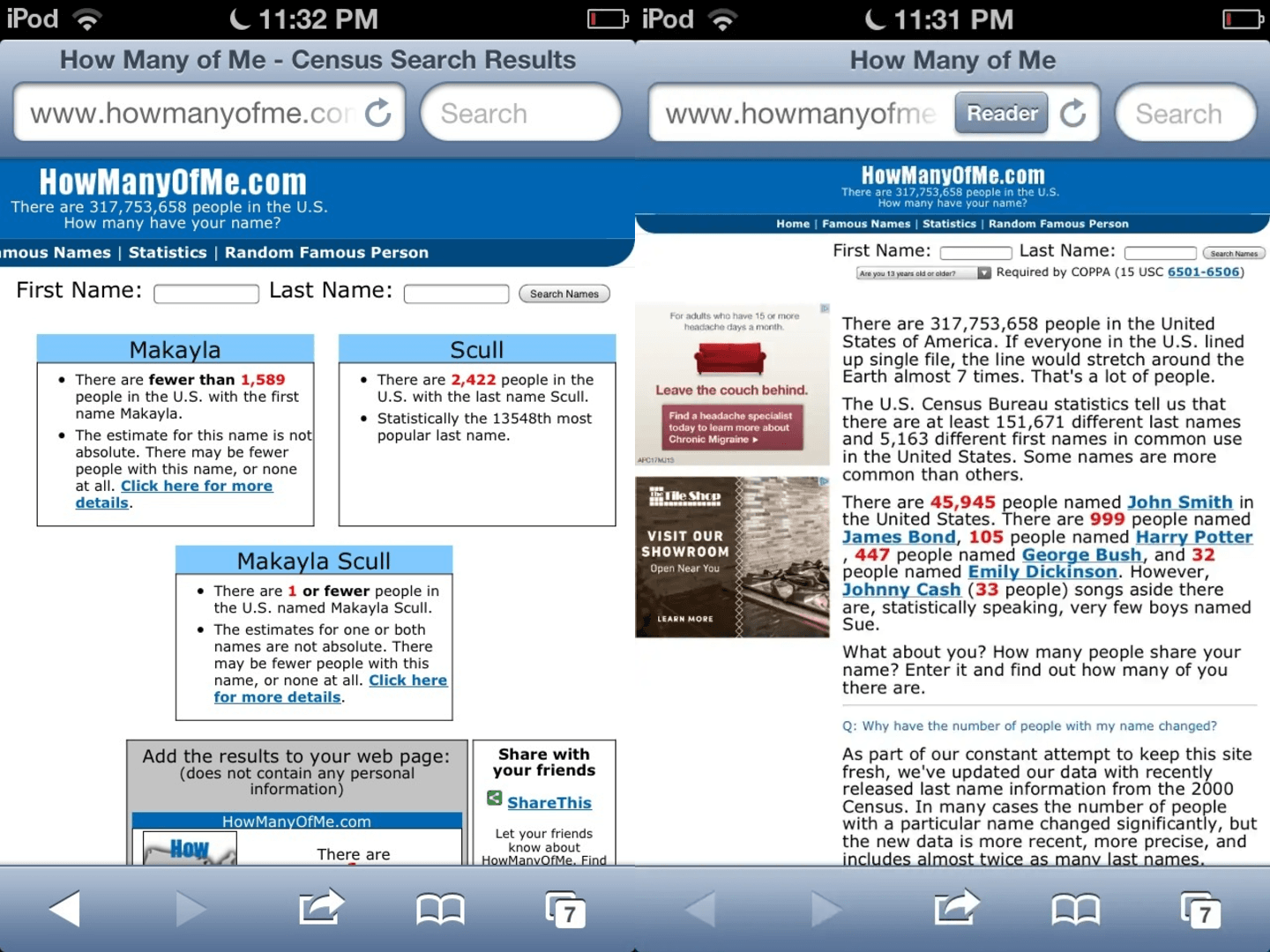
Tools that promise to answer the question directly, such as How Many Of Me, have been candid about their own limitations. The original site’s FAQ stated plainly that the program does not really know how many people have the same name, and that its output should be considered a “ballpark figure” with a very low chance of being exactly right . Newer versions of the tool continue to describe their results as statistical estimates, not exact government headcounts .
The underlying data gaps explain why precision is impossible. The U.S. Census Bureau releases counts of common first names and surnames, and its 2020 data showed more than 50,000 distinct first names and at least 156,000 distinct last names in the country . But the Census Bureau does not publish counts of specific first and last name combinations, and its confidentiality safeguards prevent the release of data that could identify individuals . No equivalent global dataset exists at all.
Comparisons between countries illustrate how much context matters. The UK’s most common name, David Smith, reflects a population of tens of millions with a shared linguistic and naming history. The United States, with a population roughly five times larger and far more diverse immigration patterns, produces different concentrations: Smith remains the most common surname, and Michael became the most common first name in 2020, but the distribution of full-name combinations is shaped by a much wider pool of names .
For anyone curious about their own name, the practical approach is to treat online tools as rough guides rather than answers. A surname distribution site such as Forebears can show approximately how many people bear a family name in a given country. A first-name popularity check can indicate how common a given name was around your birth year. Combining the two probabilities produces a very loose approximation, but the margin of error is large and the result should never be mistaken for a fact.
What the research does establish is that uniqueness in full names is rarer than intuition suggests. In societies of hundreds of millions, the mathematics of name distributions makes namesakes the norm rather than the exception. The 95.1% figure from the 2017 study is not a guarantee about your name, but it is a strong indication that somewhere, someone else answers to the same combination of words you do .
The question “how many people have the same name as me” ultimately has no precise answer, and the sources that matter most are honest about that. What can be verified is the broad pattern: most people have namesakes, common names have thousands of bearers in single countries, and no database exists that could count them all.
Can I find an exact number of people who share my full name?
No. No public database counts full names, and every online tool provides statistical estimates rather than verified headcounts . The U.S. Census Bureau publishes first-name and surname counts separately but does not release full-name combinations .
Do most people actually have at least one namesake?
Yes, according to peer-reviewed research. A 2017 study by Arthur Charpentier and Baptiste Coulmont, published on arXiv, estimated that 95.1% of Americans in a population of 320 million have at least one homonym, meaning someone with the same first and last name . The researchers described identity collisions as “frequent” in large societies like the United States and France .
Why can’t these websites give precise numbers?
Because no government releases individual-level name records, and privacy laws block access to full population data. Tools like How Many Of Me state openly that their figures are “statistical estimates rather than exact counts,” limited by incomplete data and time lags between censuses . Another version of the site explicitly disclaims guarantees of accuracy, completeness, or timeliness .
What verified data exists for common names?
The most concrete public figures come from the UK’s Open Register of the electoral roll, analyzed by identity specialists GBG in January 2017. Among registered UK adults, David Smith was the most common full name with 6,163 bearers, followed by David Jones at 5,959 and John Smith at 4,742 . These numbers cover only registered voters and exclude children and non-registered residents.
Is there a reliable way to estimate my own name’s rarity?
You can combine two public datasets for a rough approximation: surname frequency from Census Bureau data and first-name popularity from Social Security Administration birth records. However, the SSA suppresses names given to fewer than five people per year for privacy, so very rare names may return zero results even when bearers exist . Any combined estimate carries a wide margin of error and should be treated as a curiosity, not a fact.
